


 Join our Discord server

Anik Sahai
Co-Founder
The Future Speaks AI. Do You?
Free AI literacy lessons for high school students, built by students, and a student voice in AI policy. Teachers get the full curriculum free.
Meet InkyPrivate beta
An AI study buddy that knows your classes. It explains anything, and makes flashcards, quizzes and practice tests from your own notes.
At The Ethics Lab, our mission is to bridge the gap between Generation Z and the rapidly evolving world of Artificial Intelligence. Some students grow up surrounded by AI tutors, mentors, and families connected to the tech industry, while most are left without access to the knowledge shaping the future economy. The Ethics Lab exists to close that gap by giving every student, not just the privileged few, the opportunity to understand, engage with, and thrive alongside AI through the same depth of concepts, fluency, and real-world understanding. We also teach it because AI is already hurting young people, through deepfakes of classmates, chatbots that give confident wrong answers, and apps that quietly collect their data. A student who knows how these tools work is much harder to fool, and much better at protecting the people around them. And because the rules for AI in schools are being written right now, we make sure the students who live with them have a say.

Discussion time, and a hand already up
As of November 2026. How we count these
Step 1
Create an account in under a minute and get immediate access to the full Ethics Lab curriculum. Students can join independently, through their school, or through an Ethics Lab chapter at their school.
Step 2
The Ethics Lab is built around short, engaging lessons designed for how students actually learn. Through interactive modules, discussions, real-world case studies, and hands-on activities, you will learn not just how AI works, but how it impacts society, business, media, healthcare, and everyday life.
Step 3
Students start an Ethics Lab chapter at their school in two minutes, or join the one already there. Anyone in a chapter can build an AI-driven project for their community, solo or in a team of up to 4, and compete in the Social Innovation Challenge for $500, $250, and $100. Chapters can also teach our ten optional lessons. We hand over the lessons, the slides, and a check-in with our team every step of the way.
Step 4
After completing the coursework and passing the final assessment, students earn an Ethics Lab certification demonstrating real fluency in AI concepts, ethics, and responsible technology use. It is not just a line on a resume: certified students get access to internship opportunities through our partners, and discounts at local businesses near their own school. The credential also strengthens college applications by proving a student can engage thoughtfully with one of the most important technologies shaping the future.
Four steps, no cost, no application to pass. Students join on their own, through a teacher, or by starting a chapter at their school.
This was all built by students, and it keeps being built by them. Chapters teach our lessons at their own schools, chapter leads tell us what to teach next, and the Discord is where that argument actually happens. You do not have to apply to anything to walk in.
Register in two minutes, and anyone in your chapter can compete in the Challenge. Teaching our lessons is optional. No dues, no minimum size.
See how it worksStart a chapter at your school in 2 minutes, or join the one there. Then enter solo or in a team of up to 4: build an AI project that helps your community and send us a short video and a one-pager. The top three win $500, $250, and $100.
See the ChallengeWhere chapter leads compare notes, where lesson ideas get argued over, and where you can tell us what we got wrong. Open to any student, not just chapters.
Join our Discord serverFree, and you do not need an account on the platform first.
AI in Education
· KSL
Big AI News
· Crypto Briefing
AI in Education
· Phys.org
Big AI News
· TechCentral
Co-Founder
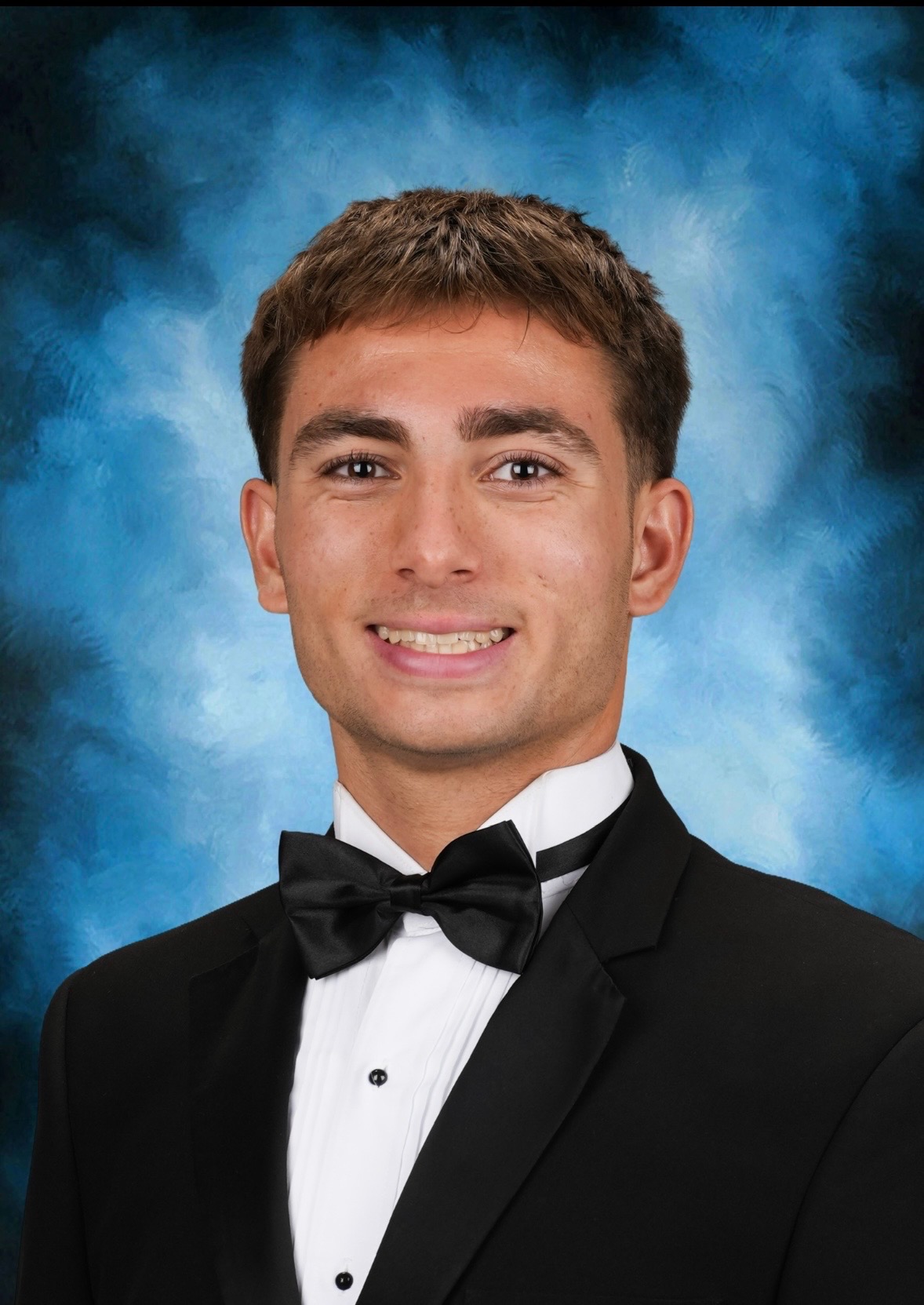
Co-Founder

Lead Curriculum Editor

Director Of Finance
Short clips from sessions, studio days, workshops and chapter events.
Florida has no law yet that requires AI instruction (HB 1503 died in March 2026), but its 2025-26 Computer Science standards already name AI, generative AI, deepfakes, and AI chat use. Here is where each one is taught.
| Standard | What it asks | Our lessons |
|---|---|---|
| SC.912.ET.2.2 | Describe the major branches of AI, including machine learning and generative AI. | 1. What is AI?2. How AI Works |
| SC.912.ET.2.5 | Describe major applications of AI and machine learning. | 9. Practical Tools and Uses10. Looking Ahead |
| SC.912.TI.2.1 | How technology can distort or misrepresent information, with emphasis on misinformation including deepfakes. | 3. Deepfakes |
| SC.912.CO.1.9 | Evaluate the accuracy, relevance, and bias of electronic information. | 3. Deepfakes4. Sycophancy |
| SC.912.TI.2.6 | Impacts of irresponsible use of information, including plagiarism and AI chat usage. | 8. Cheating5. Plagiarism and Copyright |
| SC.912.TI.2.8 | Consequences of misrepresenting digital work as your own: plagiarism, infringement, digital theft. | 5. Plagiarism and Copyright6. Art and Creativity8. Cheating |
| SC.912.TI.2.11 | Use citation tools with digital information. | 5. Plagiarism and Copyright |
| SC.912.HS.1.5 | Evaluate the risks to personal information online. | 7. Data Privacy |
| ELA.9.R.2.4 | Compare two opposing arguments, evaluating the validity of the claims. | 4. Sycophancy6. Art and Creativity10. Looking Ahead |
| ELA.K12.EE.1.1 | Cite evidence to explain and justify reasoning. | All 10 |
Lessons 3, 4, and 7 also support the social media and internet safety instruction Florida requires in grades 6-12 (s. 1003.42, F.S.). They add to it; they do not replace it. Florida Computer Science standards
See Florida's new AI rule and the free policy toolkitThis week's question
Pick one. No account, no email needed, and you see everyone else straight after.


